
Tracheoplasty
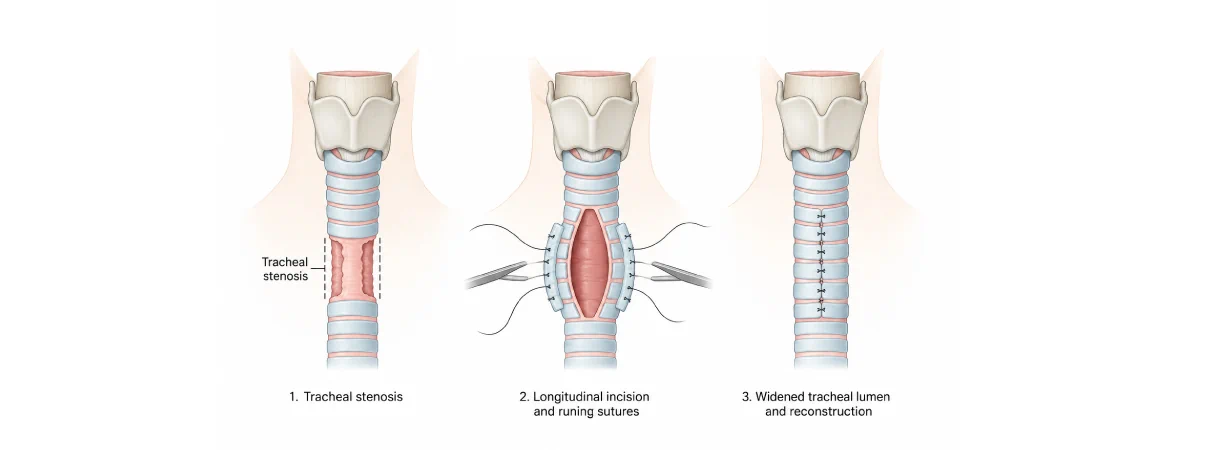
Tracheoplasty refers to surgical reconstruction or repair of the trachea, or windpipe. The specific technique used depends on the location, length, and cause of the airway problem.
One important reason for tracheal reconstruction is tracheal stenosis, a narrowing of the windpipe that can restrict airflow. Depending on the severity and characteristics of the narrowing, treatment may include airway dilation, endoscopic procedures, stenting, or surgical resection and reconstruction.
At Garv Diagnostic Centre & Hospital, patients with suspected airway narrowing can undergo appropriate evaluation so that treatment can be planned according to their individual condition.
What Is Tracheoplasty?
The trachea is the tube that carries air from the larynx to the lungs. If part of the trachea becomes narrowed, damaged, weakened, or otherwise abnormal, the airway may not allow sufficient airflow.
Tracheoplasty is a broad term used for surgical repair or reconstruction of the trachea. In some cases, treatment involves removing a narrowed or damaged segment and reconnecting the healthy ends of the trachea. This is known as tracheal resection and reconstruction.
The exact procedure depends on the underlying condition.
Why Might Tracheoplasty Be Needed?
A common indication for tracheal reconstruction is significant tracheal stenosis.
Tracheal narrowing may develop for different reasons, including:
- Previous prolonged intubation
- Previous tracheostomy
- Injury or trauma to the airway
- Scar tissue
- Inflammatory conditions
- Certain congenital airway abnormalities
- Tumours or other masses
- Other structural problems affecting the trachea
Laryngotracheal stenosis can produce symptoms such as noisy breathing, shortness of breath, and stridor, which is a high-pitched sound caused by restricted airflow.
Symptoms of Tracheal Narrowing
Patients with tracheal stenosis may experience:
- Breathlessness, particularly during activity
- Noisy breathing
- Persistent cough
- Reduced exercise tolerance
- A high-pitched breathing sound called stridor
- Difficulty breathing that may be mistaken for asthma
Symptoms can vary according to the degree and location of narrowing. Because airway symptoms can have many causes, proper evaluation is essential.
How Is Tracheal Reconstruction Planned?
Before surgery, your doctor needs to determine the exact location and extent of the airway problem.
Evaluation may involve:
- Medical history and physical examination
- Flexible laryngoscopy or airway examination
- CT or other imaging
- Bronchoscopy
- Pulmonary or breathing assessments
- Additional laboratory or diagnostic tests when required
The results help determine whether surgery is appropriate and which technique may be suitable.
Not every patient with tracheal narrowing requires open reconstruction. Less invasive options such as dilation, laser treatment, or airway stenting may be considered in selected cases.
What Happens During Tracheoplasty?
The surgical technique depends on the condition being treated.
For a tracheal resection and reconstruction, the surgeon removes the diseased or narrowed segment of the trachea and joins the remaining healthy sections together. The aim is to create a more open airway.
Because the trachea is an important airway structure, these operations require careful planning and postoperative monitoring.
Your surgeon will explain the specific procedure planned for you before surgery.
Recovery After Tracheoplasty
Recovery varies depending on the type and extent of reconstruction and the patient's overall health.
After surgery, the medical team closely monitors breathing and the healing airway. Follow-up examinations may be required to ensure that the reconstructed airway remains open.
Patients should follow instructions regarding physical activity, medications, wound care, and follow-up appointments.
In some cases, airway narrowing can recur because scar tissue develops again. Continued medical monitoring may therefore be necessary.
Possible Risks and Complications
Tracheal surgery is a significant procedure and carries potential risks.
Possible complications include:
- Bleeding
- Infection
- Anaesthesia-related complications
- Airway swelling
- Problems with healing
- Recurrent airway narrowing
- Injury to nearby structures
- Breathing difficulties
- Need for additional airway treatment
The individual risk depends on the underlying condition, the location and length of the affected trachea, and the type of reconstruction performed.
Take the Next Step Toward Airway Evaluation
Breathing problems caused by airway narrowing require appropriate diagnosis and treatment planning.
If you have persistent noisy breathing, unexplained breathlessness, stridor, or have been diagnosed with tracheal stenosis, Garv Diagnostic Centre & Hospital can help you understand the available diagnostic and treatment options.
Schedule an evaluation at Garv Diagnostic Centre & Hospital to discuss your airway condition and whether tracheal reconstruction may be appropriate for you.
Frequently Asked Questions
Q: What is tracheoplasty used for?
A: Tracheoplasty can be used to repair or reconstruct an abnormal section of the trachea. It may be considered for significant airway narrowing or other structural problems.
Q: Is tracheoplasty the same as tracheostomy?
A: No. A tracheostomy creates an opening in the neck into the trachea to provide an alternative airway. Tracheoplasty refers to surgical repair or reconstruction of the trachea.
Q: Can tracheal stenosis be treated without surgery?
A: Sometimes. Depending on the location and severity of narrowing, treatment may include balloon dilation, endoscopic procedures, laser treatment, or stenting. Some patients may require surgical reconstruction.
Q: What symptoms can tracheal stenosis cause?
A: Breathlessness, noisy breathing, stridor, coughing, and reduced exercise tolerance may occur. Symptoms vary depending on the severity and location of the narrowing.
Q: Can tracheal narrowing come back after treatment?
A: Yes. Recurrence is possible because scar tissue can develop again. Follow-up helps the medical team monitor the airway.
Q: Is tracheoplasty suitable for everyone with airway narrowing?
A: No. Treatment is individualised. Your doctor will consider the cause, location, severity of narrowing, overall health, and other available treatment options.



Office Hours
Mon–Sat: Open 24 Hours
Sun: 8:00 AM–2:00 PM


©2026 | Garv Diagnostic Centre & Hospital | All Rights Reserved | Digital Marketing By Remedo