
Stapedotomy/Stapedectomy
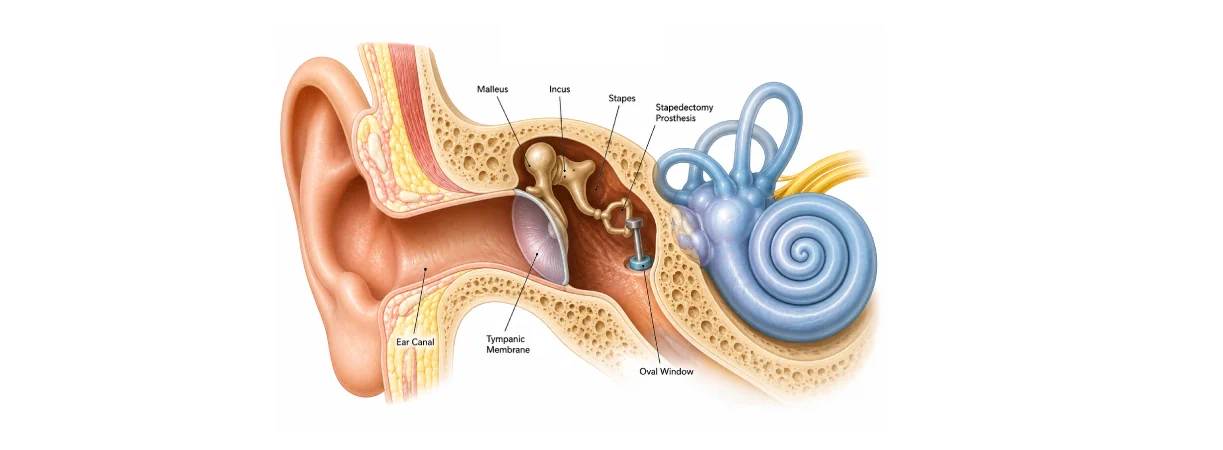
Stapedotomy and stapedectomy are surgical procedures used to treat certain types of conductive hearing loss caused by abnormal movement of the stapes, one of the three small bones in the middle ear. These procedures are most commonly associated with otosclerosis, a condition in which abnormal bone growth can restrict movement of the stapes and interfere with the normal transmission of sound to the inner ear.
At Garv Diagnostic Centre & Hospital, Dr. Vaibhav Kuchhal, ENT Specialist, evaluates patients with hearing difficulties and determines whether stapedotomy or stapedectomy may be appropriate based on the type and cause of hearing loss, hearing test results, examination findings, and overall ear health.
What Are Stapedotomy and Stapedectomy?
The stapes is the smallest bone in the human body and forms part of the chain of bones responsible for transmitting sound through the middle ear.
In stapedotomy, a small opening is created in the fixed stapes footplate, and a tiny prosthesis is placed to help restore the transmission of sound vibrations to the inner ear.
In stapedectomy, part or, in selected cases, more of the stapes is removed and replaced with a prosthesis.
The choice between the two approaches depends on the patient's ear condition, anatomy, and the surgeon's assessment.
When Are These Procedures Recommended?
Stapedotomy or stapedectomy may be considered when abnormal fixation of the stapes contributes to conductive hearing loss and the patient is an appropriate candidate for surgery.
Possible symptoms include:
- Gradually worsening hearing loss
- Difficulty understanding speech, particularly in noisy environments
- Hearing loss affecting one or both ears
- A feeling of blocked or reduced hearing
- Tinnitus in some patients
- Hearing loss associated with diagnosed or suspected otosclerosis
Not every patient with hearing loss is suitable for these procedures. A detailed assessment is required to determine the cause and type of hearing loss before surgery is considered.
How Is Otosclerosis Diagnosed?
The ENT specialist reviews the patient's symptoms, medical history, and progression of hearing loss.
Assessment may include:
- Examination of the ear
- Pure-tone audiometry
- Speech audiometry
- Tympanometry
- Other hearing tests
- Assessment of the middle-ear reflexes when appropriate
- Imaging in selected cases
These investigations help distinguish conductive hearing loss caused by stapes fixation from other forms of hearing loss.
How Is Stapedotomy or Stapedectomy Performed?
The procedure is generally performed under appropriate anaesthesia, depending on the patient's circumstances and the surgical plan.
During surgery:
- Anaesthesia is administered.
- The surgeon accesses the middle ear through the ear canal or another appropriate approach.
- The eardrum is carefully lifted to expose the middle-ear structures.
- The stapes and surrounding structures are assessed.
- In a stapedotomy, a small opening is created in the stapes footplate.
- In a stapedectomy, part or more of the stapes may be removed as appropriate.
- A small prosthesis is positioned to restore the pathway for sound transmission.
- The eardrum is returned to its appropriate position.
The exact surgical technique varies according to the patient's anatomy and the condition being treated.
What Happens After Surgery?
After the procedure, the patient is monitored while recovering from anaesthesia. The ear may initially feel blocked, and hearing may not improve immediately.
Temporary symptoms can include:
- A blocked or full sensation in the ear
- Mild ear discomfort
- Temporary hearing changes
- Mild dizziness
- Tinnitus
- Altered taste
- Tiredness
These symptoms may improve as the ear heals. Your doctor will provide specific instructions regarding medication, ear care, activity, and follow-up.
Recovery After Stapedotomy or Stapedectomy
Recovery varies between patients. Hearing improvement may occur gradually as the ear heals and the prosthesis settles.
During recovery, patients may be advised to:
- Keep the ear dry as instructed
- Take prescribed medicines as directed
- Avoid inserting anything into the ear
- Avoid forceful nose blowing when advised
- Avoid heavy lifting and strenuous activity for the recommended period
- Avoid significant pressure changes when instructed
- Attend scheduled follow-up appointments
Your ENT specialist may arrange a hearing test after an appropriate period to assess the surgical outcome.
Possible Risks and Complications
As with any ear surgery, stapedotomy and stapedectomy carry potential risks.
These may include:
- Bleeding
- Infection
- Persistent or worsening hearing loss
- Dizziness or balance problems
- Tinnitus
- Changes in taste
- Temporary or persistent changes in hearing
- Prosthesis displacement
- Damage to surrounding ear structures
- Facial nerve injury
- Rarely, severe or permanent sensorineural hearing loss
- Anaesthesia-related complications
- Need for additional surgery
The specific risks depend on the patient's hearing condition and individual anatomy. Your ENT specialist will discuss the potential risks and expected benefits before surgery.
What Should You Know Before Surgery?
Before stapes surgery, inform your doctor about:
- Existing medical conditions
- Current medications
- Allergies
- Previous ear surgery
- Previous ear infections
- Hearing changes
- Dizziness or balance problems
- Tinnitus
- Previous reactions to anaesthesia
A detailed hearing assessment is important before surgery. The doctor will explain the expected benefits, possible risks, alternative treatment options, and recovery requirements.
Can Stapedotomy or Stapedectomy Improve Hearing?
The primary goal of these procedures is to improve the transmission of sound through the middle ear when stapes fixation is responsible for conductive hearing loss.
Many appropriately selected patients may experience improvement in hearing after surgery. However, the degree of improvement varies and depends on factors such as the condition of the inner ear and the underlying cause of hearing loss.
Surgery may not correct other types of hearing loss that are unrelated to stapes fixation.
Stapedotomy vs Stapedectomy
Both procedures aim to address problems caused by an abnormally fixed stapes, but the surgical techniques differ.
Stapedotomy: A small opening is created in the stapes footplate and a prosthesis is placed through the opening.
Stapedectomy: Part or more of the stapes is removed and replaced with a prosthesis.
The choice of procedure is based on the patient's individual ear condition, anatomy, and the surgeon's assessment.
When Should You Seek an ENT Evaluation?
Consider an ENT consultation if you experience gradual hearing loss, difficulty understanding conversations, tinnitus, or other persistent changes in hearing.
A specialist assessment is particularly important when hearing loss is unexplained or progressively worsening. Hearing tests can help determine whether the problem is related to the middle ear, inner ear, or another part of the hearing system.
Consult an ENT Specialist at Garv Diagnostic Centre & Hospital
Progressive hearing loss can have different causes and requires appropriate evaluation before treatment is selected.
Dr. Vaibhav Kuchhal, ENT Specialist at Garv Diagnostic Centre & Hospital, can assess your hearing, review relevant investigations, and determine whether stapedotomy, stapedectomy, or another treatment approach may be appropriate.
Contact Garv Diagnostic Centre & Hospital to schedule an ENT consultation and discuss your hearing concerns and treatment options.
Frequently Asked Questions
Q: What is the difference between stapedotomy and stapedectomy?
A: In stapedotomy, a small opening is made in the stapes footplate and a prosthesis is placed through it. In stapedectomy, part or more of the stapes is removed and replaced with a prosthesis.
Q: Is stapes surgery painful?
A: The procedure is performed under appropriate anaesthesia, so pain is not expected during surgery. Mild discomfort or a blocked sensation in the ear may occur during recovery.
Q: How long does it take to recover after stapes surgery?
A: Recovery varies between patients. Hearing may improve gradually, and your doctor will provide specific instructions about ear care, activity, and follow-up.
Q: Will stapedotomy restore normal hearing?
A: The procedure may improve conductive hearing loss caused by stapes fixation, but the degree of improvement varies. Other factors affecting hearing can influence the final outcome.
Q: Can hearing loss return after stapedotomy or stapedectomy?
A: Hearing can change over time for several reasons, and the prosthesis or middle-ear structures can occasionally develop problems. Persistent or recurrent hearing changes should be assessed by an ENT specialist.



Office Hours
Mon–Sat: Open 24 Hours
Sun: 8:00 AM–2:00 PM


©2026 | Garv Diagnostic Centre & Hospital | All Rights Reserved | Digital Marketing By Remedo