
Salivary Gland Surgeries
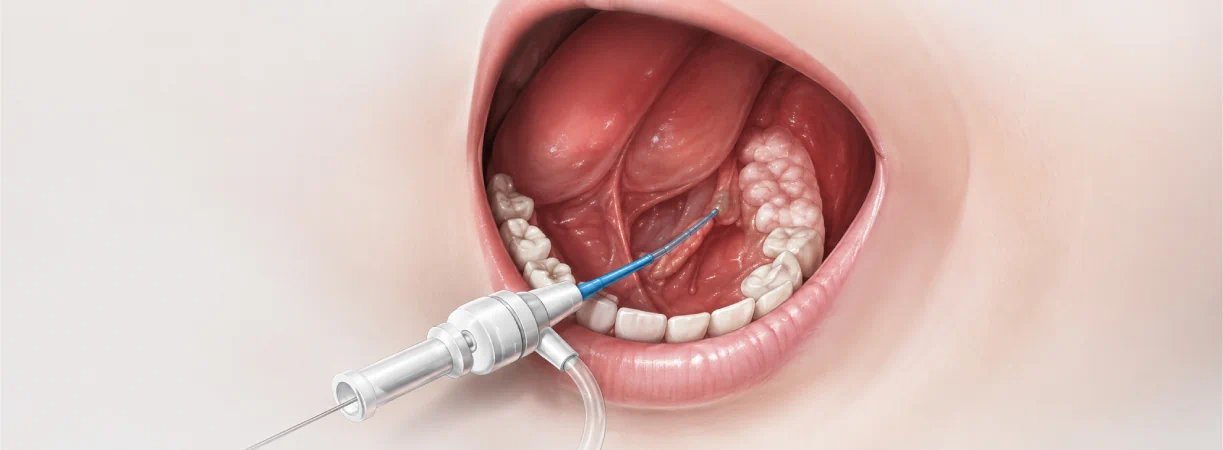
Salivary glands produce saliva, which helps keep the mouth moist, supports swallowing, and begins the digestion of food. Problems affecting these glands can develop because of stones, infections, cysts, blockages, tumours, or other structural abnormalities.
When medication or less invasive treatment is not sufficient, surgery may be considered. Salivary gland surgery includes several different procedures, depending on which gland is affected and the underlying condition.
Garv Diagnostic Centre & Hospital provides evaluation and surgical management for selected salivary gland conditions.
What Are Salivary Glands?
There are three pairs of major salivary glands:
- Parotid glands: Located in front of and below the ears.
- Submandibular glands: Located beneath the lower jaw.
- Sublingual glands: Located underneath the tongue.
There are also numerous smaller salivary glands throughout the mouth and throat.
Each gland has ducts that transport saliva into the mouth.
When Is Salivary Gland Surgery Needed?
Surgery may be considered for:
- Recurrent salivary gland infections
- Salivary gland stones
- Blocked salivary ducts
- Persistent cysts
- Benign tumours
- Malignant salivary gland tumours
- Enlarged or damaged glands
- Structural abnormalities that cause persistent symptoms
For example, blockage of the submandibular gland duct is commonly associated with salivary stones and can lead to recurrent infection or swelling.
Surgery is not required for every salivary gland problem. The appropriate treatment depends on the cause and severity of the condition.
Common Types of Salivary Gland Surgery
Parotidectomy
Parotidectomy involves removing part or all of the parotid gland. It may be performed for tumours or selected recurrent gland problems.
Because the facial nerve passes through the parotid gland, this surgery requires careful identification and protection of the nerve where possible.
Submandibular Gland Removal
A submandibular gland may be removed when recurrent infection, stones, or another condition affects the gland.
The operation generally involves an incision in the upper neck below the jaw.
Sublingual Gland Surgery
The sublingual glands are located underneath the tongue. Surgery may be considered for certain conditions, such as a ranula, a mucus-filled cyst-like swelling usually caused by leakage from the sublingual gland or its duct.
Salivary Duct Procedures
In selected cases, treatment may focus on the salivary duct rather than removing the entire gland. The appropriate approach depends on the location and cause of the blockage.
How Is Salivary Gland Surgery Planned?
Before surgery, your doctor may perform a clinical examination and recommend investigations such as ultrasound, CT, MRI, needle sampling, or other tests depending on the condition.
The purpose of these investigations is to understand:
- Which gland is affected
- The location and size of the abnormality
- Whether a stone or blockage is present
- Whether a tumour is suspected
- Whether nearby structures may be involved
The findings help determine whether surgery is necessary and what type of procedure is appropriate.
What Happens During Surgery?
The exact procedure varies according to the gland and condition.
Many salivary gland operations are performed under general anaesthesia. The surgeon accesses the affected gland or duct, removes the abnormal tissue or gland when indicated, and closes the surgical site.
A temporary drain may be placed after some procedures to prevent fluid from collecting around the wound.
Recovery After Salivary Gland Surgery
Recovery depends on the type of operation.
You may experience:
- Mild pain
- Swelling
- Temporary numbness
- Difficulty opening the mouth or moving the neck in some procedures
- Changes around the surgical site
- Temporary changes in saliva flow
Your doctor will provide instructions regarding eating, wound care, activity, medications, and follow-up.
Possible Risks
Potential complications depend on the specific surgery and may include:
- Bleeding
- Infection
- Scarring
- Nerve injury
- Temporary or permanent weakness or numbness
- Salivary leakage
- Changes in saliva production
- Recurrence of the underlying condition
For submandibular and sublingual gland surgery, nearby nerves and salivary ducts also need to be considered.
Get Your Salivary Gland Condition Evaluated
Persistent swelling, pain, recurrent infection, or a lump involving a salivary gland should be evaluated to determine its cause.
At Garv Diagnostic Centre & Hospital, patients can receive assessment for salivary gland conditions and discuss appropriate medical or surgical treatment.
Contact Garv Diagnostic Centre & Hospital to arrange a consultation and learn more about your salivary gland treatment options.
Frequently Asked Questions
Q: Can a salivary gland be removed without causing dry mouth?
A: Removing one major salivary gland does not usually eliminate saliva production because other salivary glands remain active.
Q: What causes salivary gland swelling?
A: Possible causes include stones, infection, cysts, inflammation, and tumours. A persistent swelling should be medically evaluated.
Q: Are all salivary gland lumps cancerous?
A: No. Many salivary gland lumps are benign. However, appropriate assessment is important to determine their nature.
Q: Can salivary gland stones be treated without surgery?
A: Some stones and blockages can be managed with less invasive approaches, depending on their size and location. Surgery may be considered when other treatment is unsuitable or unsuccessful.
Q: Which salivary gland is located near the ear?
A: The parotid gland is located in front of and below the ear.



Office Hours
Mon–Sat: Open 24 Hours
Sun: 8:00 AM–2:00 PM


©2026 | Garv Diagnostic Centre & Hospital | All Rights Reserved | Digital Marketing By Remedo