
Parotidectomy
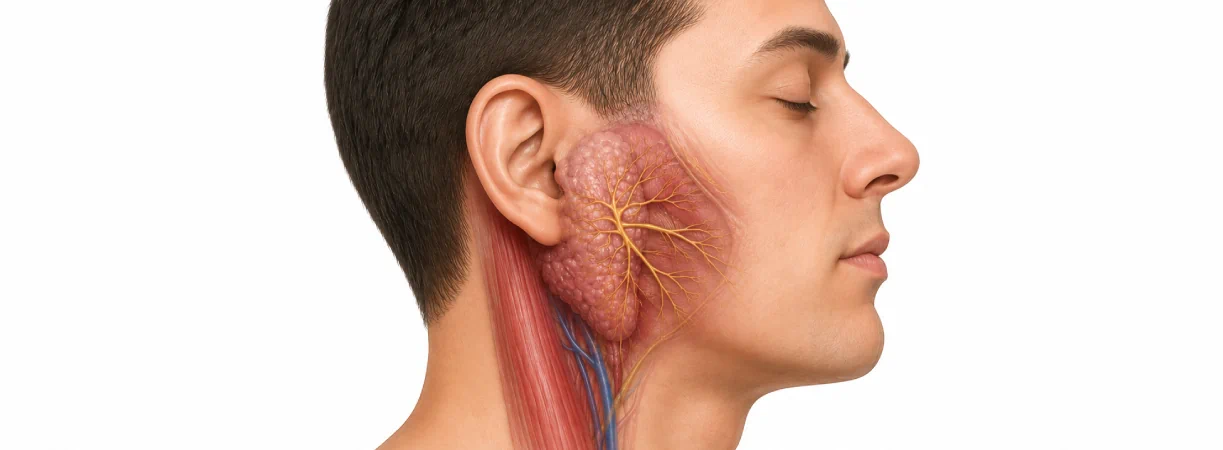
A parotidectomy is a surgical procedure to remove part or, when necessary, all of a parotid gland. The parotid glands are the largest of the major salivary glands and are located in front of and just below each ear. They produce saliva that helps moisten the mouth and begin the digestive process.
Parotidectomy may be recommended for certain parotid gland lumps, tumours, recurrent gland problems, or other conditions affecting the gland. The extent of surgery depends on the location and nature of the problem.
At Garv Diagnostic Centre & Hospital, patients with parotid gland conditions can undergo appropriate evaluation to determine whether surgery is required and which approach may be suitable.
What Is a Parotidectomy?
Parotidectomy means surgical removal of part or all of a parotid gland.
The procedure may be described as:
- Partial or superficial parotidectomy: Removal of the affected portion of the gland.
- Total parotidectomy: Removal of most or all of the gland when medically necessary.
- Extended parotidectomy: Removal of additional nearby tissue when a condition requires more extensive surgery.
The type of operation depends on the location, size, and nature of the lesion.
Most parotid lumps are benign, but some can be malignant. Surgery may therefore be recommended either to treat a known condition or, in selected cases, to obtain a definitive diagnosis.
Why Might Parotidectomy Be Recommended?
Parotid surgery may be considered for:
- Benign parotid gland tumours
- Malignant salivary gland tumours
- Certain recurrent infections
- Problems associated with salivary gland stones
- Persistent or enlarging parotid lumps
- Selected other structural abnormalities of the gland
A lump near the ear or jaw does not necessarily mean cancer. However, persistent or enlarging lumps should be evaluated by an appropriate medical professional.
Important Nerve Considerations During Parotid Surgery
One of the most important structures associated with the parotid gland is the facial nerve. This nerve passes through the gland and controls many of the muscles responsible for facial movement.
During parotid surgery, the facial nerve is identified and carefully managed where possible. Because of its close relationship to the gland, temporary or permanent facial weakness is a recognised potential complication of parotidectomy.
How Is Parotidectomy Performed?
Parotidectomy is generally performed under general anaesthesia.
The surgeon usually makes an incision in front of the ear that may extend toward the neck. The affected part of the parotid gland is then carefully separated from surrounding structures.
Depending on the condition, the surgeon may remove only the affected portion or a larger part of the gland.
A temporary drain may be placed to remove fluid or blood that collects in the surgical area. The incision is then closed with sutures or clips.
Recovery After Parotidectomy
After surgery, patients may experience:
- Mild pain or discomfort
- Swelling
- Temporary numbness around the ear or face
- Tightness around the incision
- Temporary facial weakness in some cases
- A visible scar that gradually changes as it heals
The recovery period varies according to the extent of surgery and individual health.
Your doctor will provide instructions regarding wound care, activity, medications, and follow-up.
The removed tissue is usually examined by a pathologist when necessary. The pathology findings help guide further treatment or monitoring.
Possible Risks and Complications
Potential complications include:
- Bleeding or collection of blood under the skin
- Infection
- Salivary leakage or fistula
- Numbness around the ear
- Facial nerve weakness
- Frey's syndrome, in which sweating or flushing can occur around the face while eating
- Scarring
- Changes in the contour of the face
The risks vary according to the condition and extent of surgery.
Discuss Parotid Surgery at Garv Diagnostic Centre & Hospital
A lump near the ear or jaw should be properly evaluated rather than assumed to be a simple swelling.
If you have been diagnosed with a parotid gland tumour, recurrent salivary gland problems, or another condition requiring surgery, Garv Diagnostic Centre & Hospital can provide assessment and discuss appropriate treatment options.
Contact Garv Diagnostic Centre & Hospital to schedule an evaluation and discuss whether parotidectomy may be appropriate for your condition.
Frequently Asked Questions
Q: Is parotidectomy a major surgery?
A: Parotidectomy is a surgical procedure requiring careful planning because the facial nerve runs through the parotid gland. The extent of surgery varies from patient to patient.
Q: Will my facial nerve be affected?
A: The facial nerve is carefully considered during parotid surgery. Temporary or permanent weakness can occur as a complication, depending on the condition and surgery required.
Q: Will removing a parotid gland cause dry mouth?
A: Removing one parotid gland does not usually eliminate saliva production because several other salivary glands continue to produce saliva.
Q: Will there be a scar?
A: Yes. Parotidectomy involves an incision, although the incision is generally placed along natural contours around the ear and neck.
Q: How long does recovery take?
A: Recovery varies depending on the extent of surgery, your general health, and the underlying condition. Your surgeon will provide individualised recovery instructions.



Office Hours
Mon–Sat: Open 24 Hours
Sun: 8:00 AM–2:00 PM


©2026 | Garv Diagnostic Centre & Hospital | All Rights Reserved | Digital Marketing By Remedo