
Myringotomy with Grommet Insertion
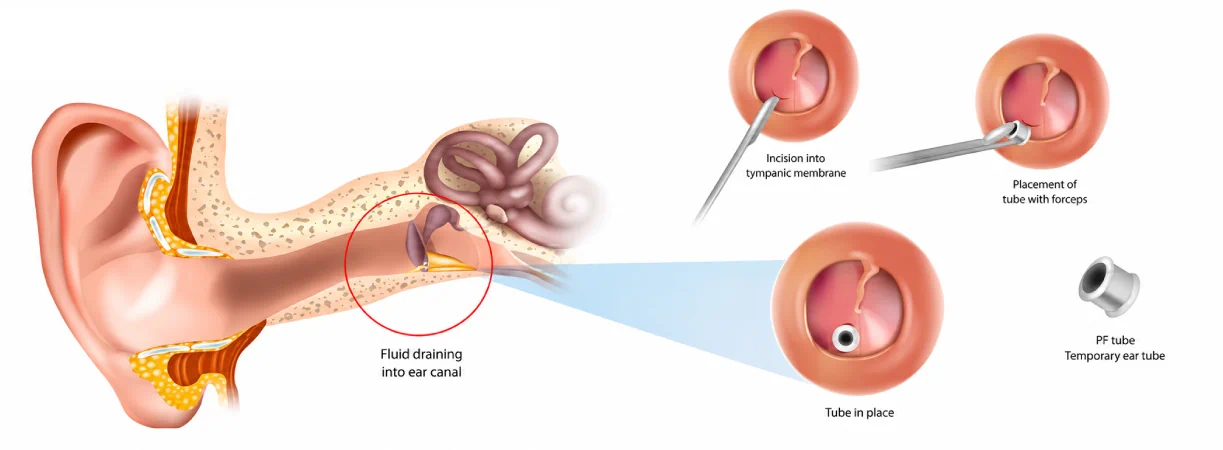
Myringotomy with grommet insertion is a procedure used to help improve ventilation and drainage of the middle ear. It involves making a small opening in the eardrum and placing a tiny tube, known as a grommet or ventilation tube, into the opening.
The middle ear normally contains air and connects to the back of the nose through the Eustachian tube. When this tube does not function properly, fluid can build up behind the eardrum, potentially causing hearing difficulties, pressure, discomfort, or recurrent ear problems.
At Garv Diagnostic Centre & Hospital, Dr. Vaibhav Kuchhal, ENT Specialist, evaluates patients with persistent middle-ear fluid, recurrent ear problems, or related hearing concerns and determines whether myringotomy with grommet insertion may be appropriate.
What Is Myringotomy with Grommet Insertion?
Myringotomy is a procedure in which a small opening is made in the eardrum to allow fluid or pressure from the middle ear to be released.
A grommet is a small ventilation tube placed into the opening. It helps maintain ventilation of the middle ear while the tube remains in position.
The procedure may be recommended when fluid or pressure problems persist and are affecting hearing or causing other symptoms.
The decision to insert a grommet depends on the patient's age, symptoms, duration of the problem, hearing status, and underlying cause.
When Is Myringotomy with Grommet Insertion Recommended?
The procedure may be considered when middle-ear fluid or pressure problems persist or repeatedly return.
Possible reasons include:
- Persistent fluid behind the eardrum
- Conductive hearing difficulties associated with middle-ear fluid
- Recurrent middle-ear problems
- A feeling of pressure or blockage in the ear
- Symptoms affecting communication or daily activities
- Middle-ear ventilation problems that have not improved with appropriate management
In children, persistent middle-ear fluid may sometimes affect hearing and, in turn, communication or learning. The ENT specialist considers the child's individual circumstances before recommending treatment.
Not every patient with middle-ear fluid requires a grommet.
How Are Middle-Ear Problems Diagnosed?
The ENT specialist reviews the patient's symptoms and medical history and examines the ears.
Depending on the condition, assessment may include:
- Examination of the eardrum
- Hearing tests
- Tympanometry
- Assessment of recurrent ear infections
- Evaluation of nasal and throat conditions that may affect Eustachian tube function
- Other investigations when clinically required
These assessments help determine whether fluid or pressure is present behind the eardrum and whether a ventilation tube may be beneficial.
How Is the Procedure Performed?
Myringotomy with grommet insertion is a relatively short procedure, but the type of anaesthesia depends on the patient's age, medical circumstances, and whether other procedures are being performed.
During the procedure:
- The patient is given the appropriate anaesthesia.
- The surgeon examines the eardrum.
- A small opening is made in the eardrum.
- Any fluid present in the middle ear is removed when appropriate.
- A small grommet is inserted into the opening.
- The position of the tube is checked before the procedure is completed.
The grommet remains in place to allow continued ventilation of the middle ear.
What Happens After Grommet Insertion?
Most patients are monitored for a short period after the procedure before being discharged, depending on their individual circumstances.
Temporary symptoms may include:
- Mild ear discomfort
- A blocked sensation
- Small amounts of ear discharge
- Temporary changes in hearing
- Mild dizziness in some patients
The doctor will provide instructions regarding ear care, medication, bathing, swimming, and follow-up.
If ear discharge occurs after grommet insertion, medical advice should be sought according to the instructions provided by the ENT team.
Recovery After Myringotomy with Grommet Insertion
Recovery is generally dependent on the individual patient and whether any other procedures have been performed.
Hearing may improve when middle-ear fluid has been contributing to hearing difficulty, although the timing and extent of improvement vary.
The grommet remains in the eardrum for a period of time and eventually comes out naturally in many patients as the eardrum heals. The timing varies depending on the type of grommet used.
Follow-up appointments are important to check the position of the grommet, assess the ear, and monitor hearing when required.
Possible Risks and Complications
As with any medical procedure, myringotomy with grommet insertion has potential risks.
These may include:
- Ear discharge
- Ear infection
- Temporary discomfort
- Blockage or displacement of the grommet
- Early or delayed extrusion of the tube
- Persistent perforation of the eardrum after the tube comes out
- Scarring of the eardrum
- Need for another grommet in the future
- Hearing changes
- Anaesthesia-related complications
The risks vary depending on the patient's age, underlying condition, and type of grommet used. Your ENT specialist will explain the relevant risks before the procedure.
What Should You Know Before Grommet Insertion?
Before the procedure, inform your doctor about the patient's medical conditions, medications, allergies, previous ear problems, previous surgeries, and any reactions to anaesthesia.
The surgical team may recommend hearing tests or other investigations before treatment.
Parents or caregivers of children should also discuss:
- Previous ear infections
- Hearing or speech concerns
- Sleep-related symptoms
- Previous treatments
- Any concerns regarding the child's development or communication
The medical team will provide specific instructions about preparation and post-procedure care.
How Long Does a Grommet Stay in the Ear?
The duration depends on the type of grommet and the patient's individual circumstances. Many grommets remain in place for several months before naturally falling out as the eardrum heals.
Some patients may require longer-term ventilation tubes depending on the underlying condition.
Regular follow-up allows the ENT specialist to monitor the tube and determine whether it remains necessary.
Can Hearing Improve After Grommet Insertion?
When hearing difficulty is caused by fluid behind the eardrum, removing the fluid and improving middle-ear ventilation may improve hearing.
However, hearing loss can have many causes. The expected improvement depends on the reason for the hearing problem and whether other ear structures are affected.
A hearing assessment can help determine the extent and cause of hearing difficulties.
When Should You Seek an ENT Evaluation?
Consider an ENT consultation if you or your child experiences:
- Recurrent ear infections
- Persistent fluid behind the eardrum
- Hearing difficulties
- A feeling of blocked or pressured ears
- Delayed response to sounds in young children
- Communication or speech concerns associated with hearing problems
- Persistent ear-related symptoms despite treatment
An ENT evaluation can determine whether middle-ear fluid or another condition is contributing to the symptoms.
Consult an ENT Specialist at Garv Diagnostic Centre & Hospital
Persistent middle-ear fluid or recurrent ear problems can affect hearing and everyday communication. A detailed ENT assessment can help identify the underlying cause and determine whether myringotomy with grommet insertion may be appropriate.
Dr. Vaibhav Kuchhal, ENT Specialist at Garv Diagnostic Centre & Hospital, can evaluate the patient's ear condition, review hearing assessments, and discuss suitable treatment options.
Contact Garv Diagnostic Centre & Hospital to schedule an ENT consultation and discuss your ear symptoms and treatment options.
Frequently Asked Questions
Q: What is a grommet?
A: A grommet is a small ventilation tube placed in the eardrum to help maintain airflow and drainage between the middle ear and the external ear while the tube remains in position.
Q: Is myringotomy with grommet insertion painful?
A: The procedure is performed using appropriate anaesthesia, so pain is not expected during the procedure. Mild discomfort may occur afterward.
Q: How long does a grommet stay in the ear?
A: The duration varies according to the type of grommet and the individual patient. Many tubes remain in place for several months and eventually come out naturally.
Q: Can water enter the ear after grommet insertion?
A: Advice about water exposure varies depending on the patient's condition and the type of grommet. Your ENT specialist will provide specific instructions about bathing and swimming.
Q: Will hearing improve after grommet insertion?
A: If hearing difficulty is caused by middle-ear fluid, hearing may improve after the fluid is drained and the middle ear is ventilated. The outcome depends on the underlying cause of the hearing problem.



Office Hours
Mon–Sat: Open 24 Hours
Sun: 8:00 AM–2:00 PM


©2026 | Garv Diagnostic Centre & Hospital | All Rights Reserved | Digital Marketing By Remedo