
Foreign Body Removal from Ear, Nose and Airway
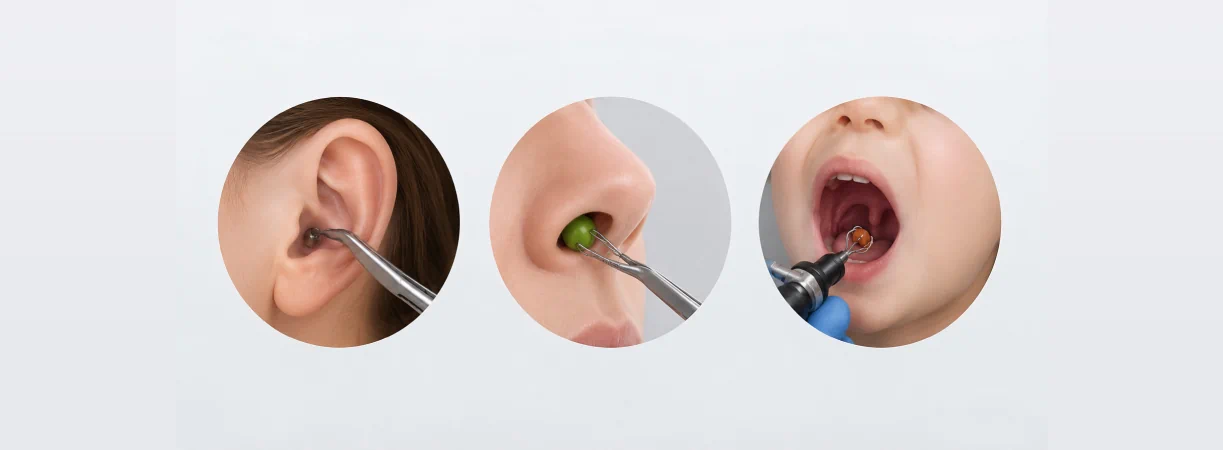
A foreign body is an object that becomes lodged where it does not normally belong. Foreign bodies can become stuck in the ear, nose, throat, or airway and may require removal by a healthcare professional.
While some objects can be removed relatively simply, others may be deeply lodged, difficult to visualise, or associated with bleeding, swelling, infection, or breathing problems.
At Garv Diagnostic Centre & Hospital, appropriate assessment and removal can be performed according to the location and nature of the foreign body.
What Is a Foreign Body?
A foreign body can include an object such as:
- Beads
- Small toys or toy parts
- Food particles
- Seeds or nuts
- Cotton or similar material
- Insects
- Small pieces of plastic
- Button batteries
- Magnets
Foreign bodies are particularly common in children, although they can occur in people of any age.
Foreign Bodies in the Ear
Objects lodged in the ear canal can cause:
- Ear pain
- Hearing reduction
- A blocked sensation
- Bleeding
- Discomfort
- Infection
Depending on the object and its location, a doctor may use specialised instruments, suction, or other techniques to remove it.
Objects should not be pushed deeper into the ear because this can injure the ear canal or eardrum.
Foreign Bodies in the Nose
Objects lodged in the nose can cause:
- One-sided nasal blockage
- Nosebleeds
- Nasal discharge
- Unpleasant-smelling discharge
- Pain or irritation
- Difficulty breathing through one nostril
A nasal foreign body may be removed using specialised instruments after the doctor has examined its location.
Button batteries and magnets require particularly prompt medical attention because they can cause significant tissue damage.
Foreign Bodies in the Airway
A foreign body entering the airway can be an emergency.
An object that obstructs the airway may cause:
- Sudden coughing
- Choking
- Noisy breathing
- Difficulty breathing
- Wheezing
- Bluish discolouration from inadequate oxygen
A suspected airway obstruction requires urgent medical assessment.
The removal method depends on where the object is located and whether it is obstructing breathing. In selected cases, specialised airway procedures may be required.
How Is Foreign Body Removal Performed?
The procedure depends on the location and type of object.
For an ear or nasal foreign body, the doctor first examines the area and identifies the object. Local anaesthetic or other medication may sometimes be used to improve comfort.
Specialised instruments may include:
- Forceps
- Suction devices
- Hooks or curettes
- Other ENT instruments
If an object cannot be safely removed in an outpatient setting, sedation or general anaesthesia may be considered.
Repeated unsuccessful attempts should generally be avoided because they can cause additional tissue injury or push the object deeper.
What Happens After Removal?
After removal, the doctor may examine the affected area again to check for:
- Remaining foreign material
- Bleeding
- Tissue injury
- Infection
- Eardrum injury
- Nasal tissue damage
Additional treatment may be required if the object caused significant injury.
Possible Risks
Potential complications depend on the location and type of foreign body and may include:
- Bleeding
- Infection
- Tissue injury
- Eardrum perforation
- Nasal injury
- Swelling
- Retained foreign material
- Airway complications
Button batteries and magnets require particular caution because of the potential for serious tissue injury.
Seek Prompt Medical Care for a Lodged Foreign Body
A foreign object in the ear, nose, throat, or airway should not be repeatedly manipulated at home.
For objects that are difficult to remove, cause bleeding or pain, or are associated with breathing difficulties, prompt medical assessment is important.
Contact Garv Diagnostic Centre & Hospital for appropriate evaluation and foreign body removal by the relevant medical team.
Frequently Asked Questions
Q: Should I try to remove an object stuck in my ear myself?
A: It is generally safer not to insert objects into the ear to remove a lodged foreign body. Attempting removal can push it deeper or damage the ear canal or eardrum.
Q: Are nasal foreign bodies dangerous?
A: They can cause tissue injury, infection, or bleeding. Button batteries and magnets require particularly prompt removal.
Q: Can a foreign body be removed without surgery?
A: Many objects in the ear or nose can be removed using specialised instruments without an operation. However, deeply lodged or difficult objects may require sedation, anaesthesia, endoscopy, or another procedure.
Q: What if the object has entered the airway?
A: Difficulty breathing, choking, or suspected airway obstruction requires urgent medical attention. Do not delay seeking emergency care.
Q: Will the area hurt after removal?
A: Some soreness or irritation may occur, particularly if the object has caused tissue injury.



Office Hours
Mon–Sat: Open 24 Hours
Sun: 8:00 AM–2:00 PM


©2026 | Garv Diagnostic Centre & Hospital | All Rights Reserved | Digital Marketing By Remedo