
Endoscopic Ear Surgery
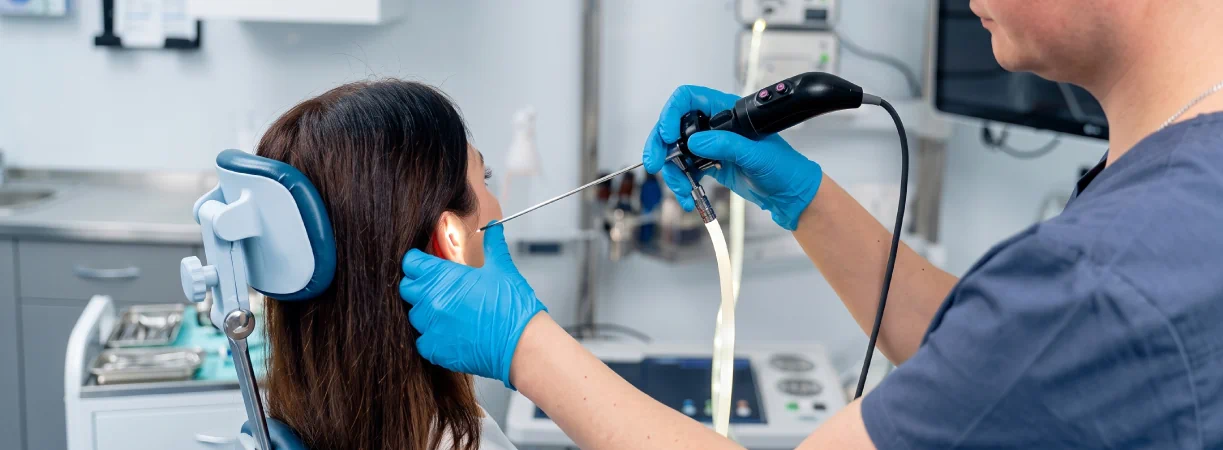
Endoscopic Ear Surgery is a minimally invasive approach used to examine and treat selected conditions affecting the ear and middle ear. It uses a small endoscope with a camera and light to provide a detailed view of the ear canal, eardrum, and areas of the middle ear.
Unlike some traditional ear surgery techniques that may require a larger incision behind the ear, selected procedures can be performed through the ear canal using an endoscope. The appropriate approach depends on the patient's condition, anatomy, and the type of treatment required.
At Garv Diagnostic Centre & Hospital, Dr. Vaibhav Kuchhal, ENT Specialist, evaluates patients with ear conditions that may benefit from an endoscopic approach and recommends treatment based on the individual diagnosis and clinical findings.
What Is Endoscopic Ear Surgery?
Endoscopic Ear Surgery uses a specialised endoscope to provide magnified visualisation of structures within the ear.
The endoscope is inserted through the ear canal and transmits images to a monitor, allowing the surgeon to examine areas that may be difficult to visualise using conventional instruments alone.
Depending on the condition, endoscopic techniques may be used for diagnosis, treatment, or surgical assistance.
The procedure may be considered for selected conditions involving the:
- Ear canal
- Eardrum
- Middle ear
- Small middle-ear structures
- Areas around the middle ear that require detailed visual assessment
The exact technique depends on the condition being treated.
When Is Endoscopic Ear Surgery Recommended?
Endoscopic ear surgery may be considered when a patient's ear condition can be appropriately assessed or treated using an endoscopic approach.
Possible applications include:
- Selected chronic middle-ear conditions
- Certain eardrum problems
- Selected cholesteatoma cases
- Middle-ear disease requiring detailed visualisation
- Removal of selected abnormal tissue
- Assessment of difficult-to-reach areas within the middle ear
- Other ear conditions where an endoscopic approach may be appropriate
Not every ear condition can be treated endoscopically. The ENT specialist determines the most suitable surgical approach after evaluating the patient's ear and underlying condition.
How Are Ear Conditions Evaluated?
The ENT specialist reviews the patient's symptoms, medical history, previous ear problems, and any previous treatment or surgery.
The evaluation may include:
- Detailed examination of the ear
- Microscopic or endoscopic examination
- Hearing tests
- Tympanometry
- Assessment of ear discharge
- Imaging studies when required
- Review of previous ear surgery
These assessments help determine the location and extent of the ear problem and whether an endoscopic approach may be suitable.
How Is Endoscopic Ear Surgery Performed?
The procedure is performed using an endoscope and specialised ear instruments. The type of anaesthesia depends on the procedure and the patient's individual circumstances.
During surgery:
- The patient is prepared according to the planned procedure and anaesthesia.
- The endoscope is introduced through the ear canal.
- The ear canal, eardrum, and middle-ear structures are examined under magnification.
- The affected area is identified.
- Specialised instruments are used to treat or remove abnormal tissue where required.
- The surgical area is carefully inspected before the procedure is completed.
- The ear is protected appropriately during the recovery period.
The exact steps depend on the underlying ear condition and the treatment required.
What Are the Potential Benefits of an Endoscopic Approach?
When clinically appropriate, endoscopic ear surgery may provide certain advantages, depending on the procedure.
These may include:
- Detailed visualisation of the ear structures
- Access to areas that may be difficult to view directly
- Use of the natural ear canal as the surgical route in selected cases
- Reduced need for larger external incisions in appropriate procedures
- Assistance with precise assessment and treatment
The potential benefits vary according to the condition and surgical technique. An endoscopic approach is not automatically better or more suitable for every patient.
What Happens After Endoscopic Ear Surgery?
After surgery, the patient is monitored according to the type of procedure and anaesthesia used.
Temporary symptoms may include:
- Mild ear discomfort
- A blocked or full sensation
- Temporary hearing changes
- Mild dizziness
- Tinnitus
- Small amounts of ear discharge
- Tiredness
The doctor will provide specific instructions regarding medication, ear care, activity, water exposure, and follow-up.
Recovery After Endoscopic Ear Surgery
Recovery depends on the condition being treated and the extent of the procedure.
Hearing may initially feel different because of swelling or material placed in the ear during healing. Improvement may occur gradually as the ear recovers.
During recovery, patients may be advised to:
- Keep the ear dry as instructed
- Take prescribed medicines as directed
- Avoid inserting anything into the ear
- Avoid forceful nose blowing when advised
- Avoid strenuous activity for the recommended period
- Attend scheduled follow-up appointments
Follow-up is important for monitoring healing and assessing the condition of the ear after surgery.
Possible Risks and Complications
As with any surgical procedure, endoscopic ear surgery has potential risks. These vary depending on the condition being treated and the specific procedure performed.
Possible complications may include:
- Bleeding
- Infection
- Ear discharge
- Temporary or persistent hearing changes
- Dizziness or balance problems
- Tinnitus
- Changes in taste
- Injury to surrounding ear structures
- Facial nerve injury
- Persistent or recurrent disease
- Need for additional treatment
- Anaesthesia-related complications
Your ENT specialist will explain the risks relevant to your specific procedure before surgery.
What Should You Know Before Endoscopic Ear Surgery?
Before surgery, inform your doctor about:
- Existing medical conditions
- Current medications
- Allergies
- Previous ear surgeries
- Previous ear infections
- Hearing difficulties
- Tinnitus or dizziness
- Previous reactions to anaesthesia
Depending on the condition, hearing tests, imaging, or other investigations may be required before surgery.
The surgical team will also provide instructions regarding fasting, medications, arrival time, ear care, and post-operative recovery.
Is Endoscopic Ear Surgery Suitable for Everyone?
No. Endoscopic ear surgery is appropriate for selected conditions and depends on the location and extent of the disease, the patient's anatomy, and the type of treatment required.
Some ear conditions may be better managed using another surgical approach. The ENT specialist will assess the individual case and recommend the most appropriate technique.
When Should You Seek an ENT Evaluation?
An ENT consultation may be appropriate if you experience:
- Persistent ear discharge
- Hearing difficulties
- Recurrent ear infections
- Ear pain or pressure
- A known eardrum or middle-ear problem
- Tinnitus
- Dizziness or balance concerns
- Persistent symptoms following previous ear surgery
A detailed examination can help identify the cause of the problem and determine whether medical management, endoscopic treatment, or another surgical approach may be appropriate.
Consult an ENT Specialist at Garv Diagnostic Centre & Hospital
Persistent ear symptoms should be assessed to identify the underlying cause and determine the most appropriate treatment.
Dr. Vaibhav Kuchhal, ENT Specialist at Garv Diagnostic Centre & Hospital, can evaluate your ear condition, review hearing tests and relevant investigations, and discuss whether Endoscopic Ear Surgery may be suitable.
Contact Garv Diagnostic Centre & Hospital to schedule an ENT consultation and discuss your ear symptoms and treatment options.
Frequently Asked Questions
Q: What is Endoscopic Ear Surgery?
A: Endoscopic Ear Surgery uses a small camera-equipped endoscope introduced through the ear canal to provide a detailed view of the ear and, in selected cases, guide surgical treatment.
Q: Is Endoscopic Ear Surgery minimally invasive?
A: It can be a minimally invasive approach for selected ear conditions because the ear canal may be used to access the affected area, potentially reducing the need for larger external incisions.
Q: Is Endoscopic Ear Surgery performed under general anaesthesia?
A: The type of anaesthesia depends on the specific procedure and the patient's individual circumstances. Your ENT specialist will explain the anaesthesia plan before treatment.
Q: Will Endoscopic Ear Surgery improve hearing?
A: Hearing may improve when the underlying condition is contributing to hearing loss and can be appropriately treated. The outcome depends on the condition and the structures involved.
Q: How long does recovery take after Endoscopic Ear Surgery?
A: Recovery varies according to the procedure and the patient's individual condition. Your doctor will provide specific instructions regarding ear care, activity, and follow-up.



Office Hours
Mon–Sat: Open 24 Hours
Sun: 8:00 AM–2:00 PM


©2026 | Garv Diagnostic Centre & Hospital | All Rights Reserved | Digital Marketing By Remedo