
Bronchial Endoscopy
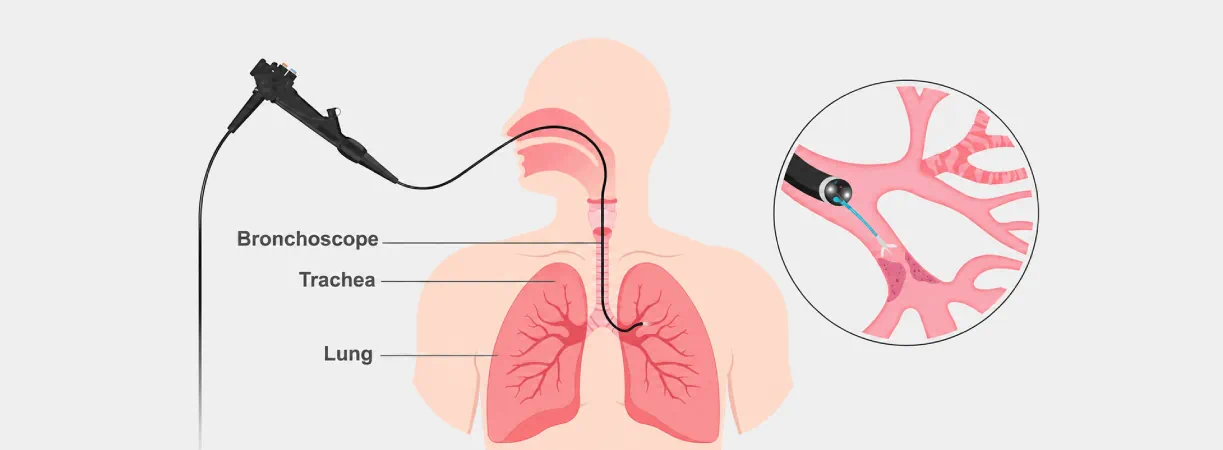
The breathing passages carry air from the throat into the lungs through a network of airways. Problems involving these passages can sometimes cause persistent cough, breathing-related symptoms or other unexplained airway complaints.
Bronchial endoscopy, also known as bronchoscopy, allows direct visual examination of the airways using a specialised endoscope. It may be recommended when detailed assessment of the bronchial passages is required.
At Garv Diagnostic Centre & Hospital, Dr. Vaibhav Kuchhal, ENT Specialist, evaluates selected upper and lower airway concerns and determines whether bronchial endoscopic assessment is appropriate.
What Is Bronchial Endoscopy?
Bronchial endoscopy involves using an endoscope to examine the airways. The instrument contains a camera and light source that allow the doctor to visualise the internal airway structures.
It can provide information that may not be available through a routine physical examination.
The procedure is recommended only when clinically indicated and forms part of a broader assessment of the patient's symptoms and medical history.
When May Bronchial Endoscopy Be Considered?
Bronchial endoscopy may be considered when a detailed assessment of the airways is required.
Depending on the clinical situation, symptoms may include:
- Persistent or unexplained cough
- Unusual airway symptoms
- Breathing-related complaints requiring further assessment
- Suspected airway abnormalities
- Other symptoms where direct airway examination may be useful
The need for bronchoscopy depends on the individual patient's condition and the findings during the initial evaluation.
Why Direct Airway Visualisation Can Help
Airway symptoms can have several possible causes. Direct visualisation allows the doctor to assess the internal airway structures and identify abnormalities that may require further investigation.
The findings can contribute to diagnosis and help determine the next stage of treatment.
Bronchial endoscopy may also be useful when other investigations do not provide enough information about the cause of a patient's symptoms.
How Is the Procedure Performed?
The procedure involves carefully passing an endoscope through the appropriate airway route to examine the bronchial passages.
The preparation, type of anaesthesia or sedation and duration depend on the specific procedure and clinical circumstances.
Patients are provided with appropriate instructions before the procedure and advised about aftercare afterwards.
What Can Bronchial Endoscopy Help Assess?
The procedure provides direct visualisation of the airway passages. It may help the doctor assess abnormalities, narrowing, inflammation or other changes that require further attention.
If additional testing is clinically required, the doctor may recommend it based on the findings.
Before and After Bronchial Endoscopy
Preparation instructions are provided before the procedure. Patients may be advised about food and fluid restrictions and other precautions.
Following the procedure, some temporary throat irritation or coughing may occur depending on the procedure performed. The treating team provides specific aftercare instructions.
Patients should follow the recommended follow-up plan to ensure that findings are reviewed and further management is arranged if required.
Personalised Assessment
Not every cough or breathing complaint requires bronchial endoscopy. The procedure is considered after assessing the patient's symptoms, medical history and clinical findings.
The objective is to use endoscopy when it can provide meaningful information for diagnosis or treatment.
Consult an ENT Specialist
If you have persistent or unexplained airway symptoms, consult Dr. Vaibhav Kuchhal at Garv Diagnostic Centre & Hospital for appropriate assessment and to understand whether bronchial endoscopy may be required.
Frequently Asked Questions
Q: What is bronchial endoscopy?
A: Bronchial endoscopy, also known as bronchoscopy, is a procedure that allows the doctor to directly examine the airways using a specialised endoscope.
Q: Why might a doctor recommend bronchial endoscopy?
A: It may be recommended when persistent or unexplained airway symptoms require direct visual assessment or when further information is needed for diagnosis and treatment planning.
Q: Does every persistent cough require bronchoscopy?
A: No. Most cases of cough do not require bronchoscopy. The procedure is considered only when clinically appropriate.
Q: What should I expect after the procedure?
A: Some temporary throat irritation or coughing may occur. The treating team will provide specific instructions based on the procedure performed.
Q: Is bronchial endoscopy safe?
A: Bronchial endoscopy is a commonly performed medical procedure, but like any procedure, it can have risks. Your doctor will discuss the relevant risks and precautions before proceeding.



Office Hours
Mon–Sat: Open 24 Hours
Sun: 8:00 AM–2:00 PM


©2026 | Garv Diagnostic Centre & Hospital | All Rights Reserved | Digital Marketing By Remedo