
Vestibular Evoked Myogenic Potential (VEMP)
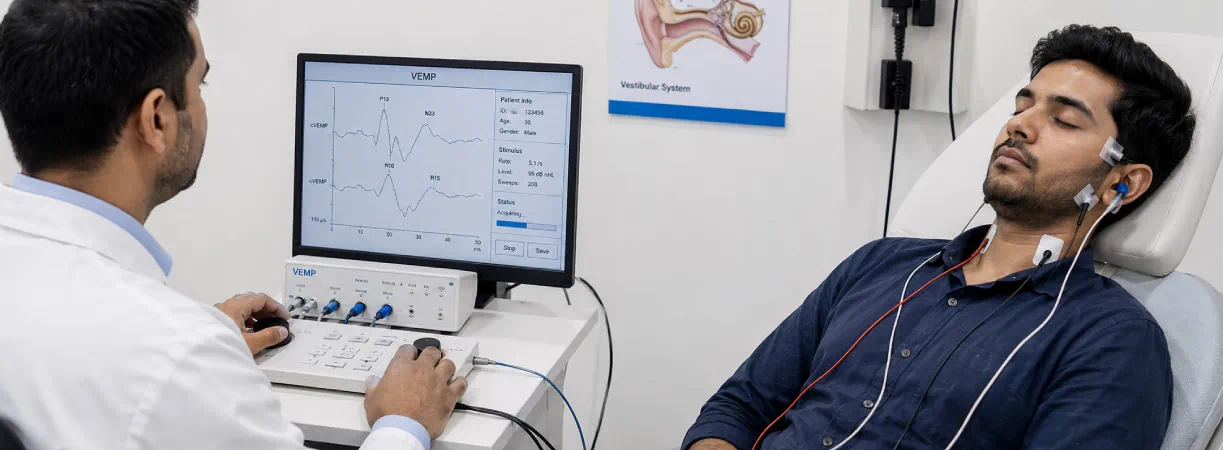
Feeling dizzy or unsteady can be frustrating, especially when the cause is not immediately obvious. Balance depends on several systems working together, including the eyes, brain, muscles, and vestibular system inside the inner ear. When one part of this system is not functioning properly, symptoms such as vertigo, imbalance, or sensitivity to movement may occur.
Vestibular Evoked Myogenic Potential, commonly known as VEMP, is a specialised diagnostic test that evaluates specific parts of the vestibular system. It measures muscle responses triggered by sound or vibration and can provide useful information about how certain balance organs and their associated pathways are functioning.
At Garv Diagnostic Centre & Hospital, Dr. Vaibhav Kuchhal, ENT specialist, evaluates patients with hearing, ear, dizziness, and balance concerns. When appropriate, VEMP may be included as part of a comprehensive vestibular assessment.
What Is VEMP Testing?
VEMP is a type of vestibular test that measures reflexive muscle responses following sound or vibration stimulation.
The vestibular system contains several structures that help the brain understand head movement and position. VEMP testing focuses on specific vestibular pathways associated with the otolith organs, particularly the saccule and utricle, along with the nerves and muscles involved in the corresponding reflexes.
Two commonly performed forms of VEMP testing are:
- Cervical VEMP (cVEMP): Primarily evaluates pathways associated with the saccule and inferior vestibular nerve.
- Ocular VEMP (oVEMP): Primarily evaluates pathways associated with the utricle and superior vestibular nerve.
The exact testing method depends on the clinical question and the patient's symptoms.
Why Is VEMP Performed?
VEMP may be recommended when an ENT specialist needs additional information about vestibular function.
It can be considered for patients experiencing:
- Recurrent dizziness or vertigo
- Balance difficulties
- Unusual sensitivity to sound or pressure
- Symptoms suggesting a vestibular disorder
- Certain inner ear conditions
- Findings that require more detailed vestibular evaluation
VEMP is not required for everyone with dizziness. Your doctor will determine whether the test is appropriate based on your symptoms, examination, and other hearing or balance test results.
How Does a VEMP Test Work?
During VEMP testing, electrodes are placed on specific muscles depending on which type of VEMP is being performed.
For cVEMP, electrodes are commonly positioned over the neck muscles. The patient is asked to activate the muscles, often by turning or lifting the head in a particular direction while listening to sounds delivered through earphones.
For oVEMP, electrodes are placed beneath the eyes, and the patient is typically asked to look upward while sounds or vibrations are delivered.
The equipment records the resulting muscle responses. These responses provide information about the function of specific vestibular pathways.
Your healthcare professional will explain the position and instructions required during the test.
Is VEMP Testing Painful?
VEMP is generally considered a noninvasive test.
The electrodes are placed on the skin, and sounds or vibrations are used to stimulate the vestibular system. You may need to maintain a particular head or eye position during the examination, which can feel slightly tiring or unfamiliar.
Some people may experience brief dizziness during vestibular testing, but the experience varies from person to person. Your healthcare team can guide you through the process and explain what to expect.
VEMP and the Inner Ear Balance System
The inner ear contains both hearing and balance structures. While the cochlea is primarily involved in hearing, the vestibular organs provide the brain with information about movement and orientation.
The otolith organs, including the saccule and utricle, help detect linear acceleration and changes in head position.
VEMP provides information about specific reflex pathways connected to these structures. This makes it different from standard hearing tests, which primarily assess auditory function.
VEMP and Dizziness
Dizziness can develop for many reasons. Inner ear disorders are one possible cause, but neurological, cardiovascular, medication-related, visual, and other factors can also contribute.
When a vestibular cause is suspected, VEMP may help provide additional information about specific parts of the balance system.
The results are interpreted alongside the patient's symptoms and other investigations. An abnormal VEMP result does not automatically identify the exact cause of dizziness, so a complete evaluation remains important.
VEMP and Other Vestibular Tests
No single balance test evaluates every part of the vestibular system.
Depending on your symptoms, your ENT specialist may recommend other assessments, such as:
- Vestibular function testing
- Hearing tests
- Tympanometry
- Otoacoustic Emissions
- Brainstem Evoked Response Audiometry
- Electrocochleography
- Other balance assessments when clinically indicated
Each test provides different information. Combining appropriate results can help create a clearer picture of how the hearing and balance systems are functioning.
What Happens Before a VEMP Test?
Before testing, your healthcare professional will discuss your symptoms and medical history. They may also review previous hearing or balance test results.
You will receive instructions about how to sit, move your head, or position your eyes during the examination. Following these instructions carefully helps obtain reliable measurements.
Your healthcare provider may also provide specific preparation instructions depending on the type of vestibular testing being performed.
What Happens After VEMP?
After the test, the recorded responses are analyzed by the appropriate healthcare professional.
Your doctor will consider the VEMP findings together with your symptoms, physical examination, hearing results, and other vestibular investigations.
If the results suggest that additional evaluation is needed, further testing may be recommended. The next step depends on the underlying symptoms and the overall clinical picture.
When Should You Consider VEMP Testing?
VEMP is a specialised investigation and is not a routine test for every patient with dizziness.
It may be considered when symptoms or other findings suggest that a more detailed evaluation of specific vestibular pathways could be useful.
If you experience recurring vertigo, unexplained imbalance, unusual sensitivity to sound or pressure, or other persistent balance symptoms, an ENT evaluation can help determine which diagnostic tests are appropriate.
Find Answers for Balance Concerns At Garv Diagnostic Centre & Hospital
Persistent dizziness, vertigo, and balance problems should not simply be dismissed as something you have to live with. A detailed assessment can help identify whether the inner ear or another part of the balance system may be contributing to your symptoms.
If you are experiencing ongoing balance or vestibular concerns, consult Dr. Vaibhav Kuchhal, ENT specialist, for a comprehensive evaluation and guidance on whether VEMP or another diagnostic test may be appropriate.
Frequently Asked Questions
Q: What does a VEMP test measure?
A: VEMP measures reflexive muscle responses to sound or vibration. These responses provide information about specific pathways within the vestibular system.
Q: What is the difference between cVEMP and oVEMP?
A: cVEMP primarily evaluates pathways associated with the saccule and inferior vestibular nerve, while oVEMP primarily evaluates pathways associated with the utricle and superior vestibular nerve.
Q: Is VEMP a hearing test?
A: No. VEMP is primarily a vestibular test. It evaluates specific parts of the balance system rather than measuring hearing sensitivity.
Q: Does VEMP cause dizziness?
A: Some patients may experience brief dizziness or an unusual sensation during vestibular stimulation, but this varies. Your healthcare professional will explain what you may experience before testing.
Q: How long does VEMP testing take?
A: The duration can vary depending on the type of VEMP performed and whether other vestibular tests are completed during the same appointment.
Q: Does an abnormal VEMP result mean I have a specific disease?
A: Not necessarily. VEMP findings need to be interpreted alongside your symptoms, examination, and other diagnostic results. Your ENT specialist can explain what the findings mean in your particular situation.



Office Hours
Mon–Sat: Open 24 Hours
Sun: 8:00 AM–2:00 PM


©2026 | Garv Diagnostic Centre & Hospital | All Rights Reserved | Digital Marketing By Remedo