
Otoacoustic Emission (OAE)
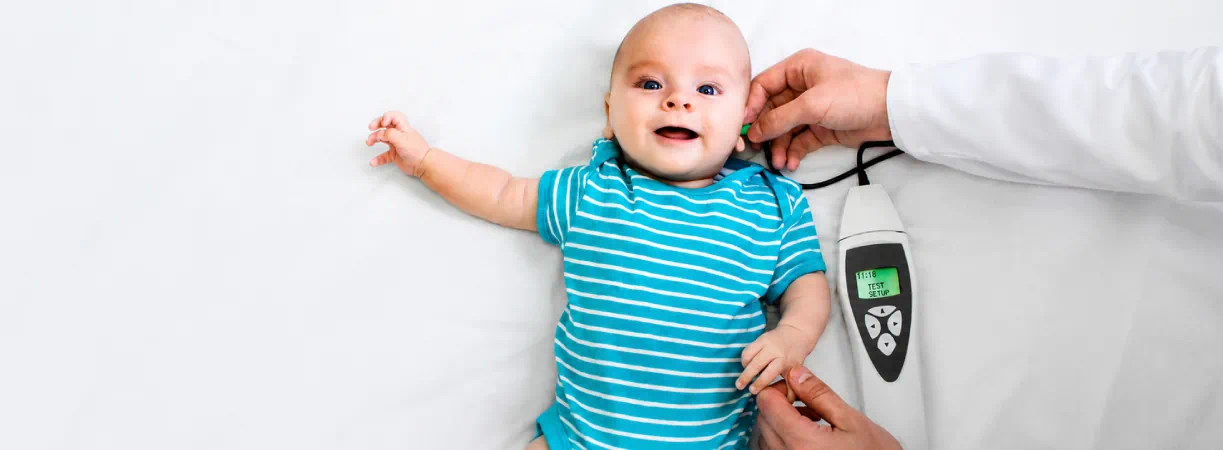
Hearing plays an important role in communication, learning, and everyday interactions. When hearing concerns arise, a detailed evaluation can help determine whether the ears are responding normally to sound. For babies and young children, identifying hearing difficulties can be particularly important because hearing is closely connected with speech and language development.
Otoacoustic Emission, commonly known as OAE testing, is a quick and noninvasive assessment used to evaluate the function of the inner ear, particularly the cochlea. It can provide useful information about how the inner ear responds to sound and is often used when a person cannot reliably respond to conventional hearing tests.
At Garv Diagnostic Centre & Hospital, Dr. Vaibhav Kuchhal, ENT specialist, provides evaluation and guidance for patients with hearing and ear-related concerns. Depending on the patient's age, symptoms, and clinical needs, OAE testing may be recommended as part of a broader hearing assessment.
What Is an OAE Test?
Otoacoustic emissions are very soft sounds produced by the inner ear in response to stimulation. These sounds are associated with the normal activity of the cochlea.
During an OAE test, a small probe is placed gently in the ear canal. The probe delivers sounds into the ear and contains a sensitive microphone that detects the response produced by the inner ear.
The test does not require the patient to raise a hand, press a button, or describe what they hear. The equipment records the response automatically and provides information that can help determine whether cochlear function appears to be present.
Why Is OAE Testing Performed?
OAE testing can be useful in several situations. It is commonly used for hearing screening in newborns and may also be recommended for infants, young children, or individuals who cannot reliably participate in behavioral hearing tests.
An OAE assessment may be considered when there are concerns about:
- Hearing development in infants or children
- Delayed speech or language development
- Difficulty responding to sounds
- Possible hearing loss
- Certain ear or medical conditions that may affect hearing
- Monitoring hearing in specific clinical situations
The test may also be performed alongside other hearing assessments when additional information about inner ear function is needed.
How Does an OAE Test Work?
The procedure is relatively simple.
Your healthcare professional places a small probe into the ear canal. The probe needs to fit appropriately to create a suitable seal without causing discomfort.
The device then presents carefully selected sounds through the probe. If the cochlea responds, the resulting emission is detected by the microphone within the probe.
The equipment analyzes these responses and provides a result that can be interpreted by the healthcare professional.
Because the test relies on the ear's response rather than the patient's active participation, it can be particularly useful for newborns and young children.
Is OAE Testing Painful?
OAE testing is generally painless and noninvasive. The probe sits in the ear canal while the equipment records the inner ear's response.
Some children may be curious or uncomfortable with having something placed near their ear, but the test itself does not involve needles or surgical procedures.
For infants, the test is often easiest when the baby is calm or sleeping. Keeping the environment quiet can also help obtain reliable measurements.
OAE Testing in Newborns
Newborn hearing screening is one of the most common applications of OAE testing. Babies cannot communicate whether they hear sounds, so an objective screening method is needed.
OAE testing can be performed soon after birth and may help identify babies who require further hearing evaluation.
A screening result that does not show a clear response does not automatically mean that a baby has permanent hearing loss. Temporary factors, such as fluid or debris in the ear canal or middle ear, can affect the result.
When additional evaluation is recommended, further testing can help determine whether a hearing concern is actually present.
OAE Testing for Children
Children who are too young to participate reliably in conventional hearing tests may benefit from objective assessments such as OAE testing.
It can be useful when there are concerns about a child's response to sounds, speech development, or hearing behavior. Depending on the child's age and clinical situation, OAE testing may be combined with other hearing assessments.
Early identification of hearing difficulties can help families and healthcare professionals determine whether additional evaluation or support is needed.
What Can Affect OAE Results?
OAE results can be influenced by conditions affecting the ear canal or middle ear.
For example, excessive earwax, fluid behind the eardrum, or other temporary ear conditions may interfere with the sound reaching the cochlea or with the response being measured.
Background noise can also affect testing, which is why OAE testing is generally performed in a quiet environment.
For these reasons, an OAE result should always be interpreted alongside the patient's medical history, ear examination, and other relevant hearing tests.
OAE and Other Hearing Tests
OAE testing evaluates a different aspect of hearing than Pure Tone Audiometry.
Pure Tone Audiometry measures the softest sounds a person can detect at different frequencies and requires active responses from the individual. OAE testing measures the inner ear's response to sound and does not require the person to indicate whether they heard the sound.
Tympanometry is another complementary test that evaluates eardrum movement and middle ear function.
Depending on the patient's symptoms, age, and hearing concerns, an ENT specialist may recommend one or more of these tests to obtain a more complete understanding of ear and hearing function.
What Happens After an OAE Test?
The next step depends on the test result and the reason the assessment was performed.
If the response is consistent with expected cochlear function, additional testing may not be necessary in some screening situations. However, if the result is unclear or does not show the expected response, your healthcare provider may recommend repeating the test or performing additional hearing evaluations.
The results should always be considered in context. An OAE result alone does not provide a complete diagnosis of every type of hearing loss.
When Should You Consider an OAE Test?
OAE testing may be appropriate when an objective assessment of inner ear function is needed, particularly for newborns and young children who cannot reliably participate in conventional hearing tests.
It may also be considered when a healthcare professional needs additional information about cochlear function as part of an overall hearing evaluation.
If you have concerns about your child's response to sound, speech development, or hearing, discussing those concerns with an ENT specialist can help determine whether further testing is appropriate.
Supporting Better Hearing Through Early Evaluation At Garv Diagnostic Centre & Hospital
Hearing concerns can be difficult to recognize, particularly in infants and young children who cannot describe what they hear. OAE testing provides a convenient, objective way to assess certain aspects of inner ear function and can be an important part of hearing screening and evaluation.
For personalised assessment of hearing and ear-related concerns, consult Dr. Vaibhav Kuchhal, ENT specialist, to understand whether OAE testing or another hearing evaluation may be appropriate.
Frequently Asked Questions
Q: Is an OAE test safe for babies?
A: Yes. OAE testing is a noninvasive hearing assessment commonly used for newborn and infant hearing screening.
Q: Does an OAE test hurt?
A: No. The test is generally painless. A small probe is placed in the ear canal to present sounds and measure the inner ear's response.
Q: What does a failed OAE screening mean?
A: A result that does not show the expected response does not necessarily mean permanent hearing loss. Temporary factors such as fluid or debris can affect the result, so additional testing may be recommended.
Q: Can adults undergo OAE testing?
A: Yes. Although OAE testing is widely used for newborn and pediatric screening, it can also provide useful information about inner ear function in selected adults.
Q: Is OAE the same as a regular hearing test?
A: No. OAE testing measures the inner ear's response to sound, while behavioral hearing tests such as Pure Tone Audiometry measure how softly a person can hear different tones.
Q: What happens if my child's OAE result is abnormal?
A: Your ENT specialist may recommend repeating the screening or performing additional hearing and middle ear tests to better understand the result and determine whether further evaluation is needed.



Office Hours
Mon–Sat: Open 24 Hours
Sun: 8:00 AM–2:00 PM


©2026 | Garv Diagnostic Centre & Hospital | All Rights Reserved | Digital Marketing By Remedo