
ECG
Your heart beats continuously, often without you giving it a second thought. But when you experience a racing heartbeat, chest discomfort, dizziness, or unexplained shortness of breath, understanding what is happening with your heart becomes important.
An electrocardiogram, or ECG, is a simple and widely used diagnostic test that records the electrical activity of the heart. It can provide valuable information about heart rate, rhythm, and certain changes that may suggest an underlying cardiac problem.
An ECG is quick, noninvasive, and does not involve needles or medication. It may be performed as part of a routine evaluation or when specific symptoms require further investigation.
What Is an ECG?
An ECG records the electrical signals that control your heartbeat. Every heartbeat begins with an electrical signal that travels through the heart, causing the heart muscle to contract and pump blood.
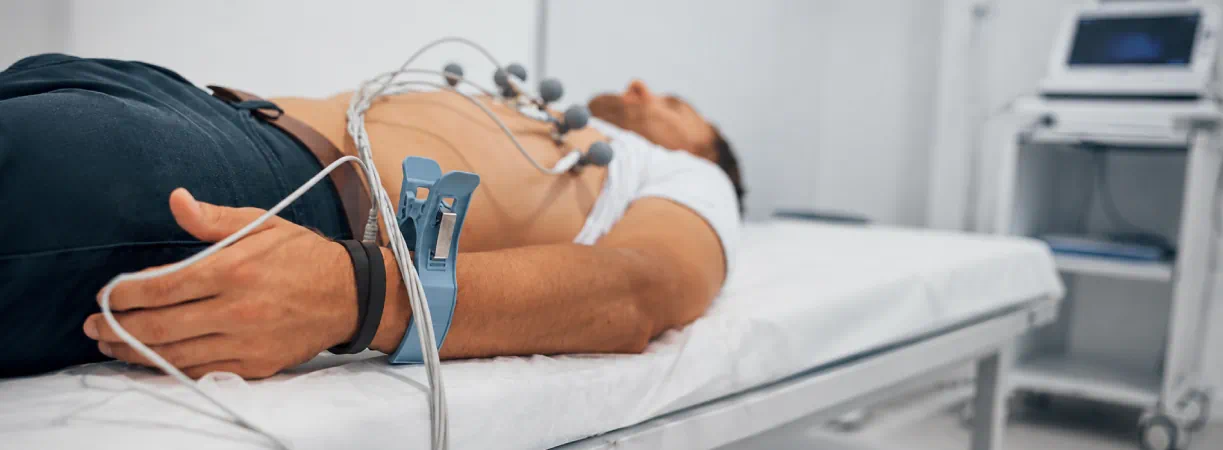
During an ECG, small adhesive electrodes are placed on specific areas of the chest and sometimes the arms and legs. These electrodes detect the heart's electrical activity and transmit the information to an ECG machine.
The machine produces a tracing that shows the electrical patterns of the heartbeat. A healthcare professional then reviews the recording for abnormalities.
Why Is an ECG Performed?
An ECG may be recommended for several reasons. Your healthcare provider may suggest one if you experience:
- Chest discomfort or pain
- Palpitations or an unusually fast heartbeat
- Dizziness or lightheadedness
- Fainting or near-fainting
- Shortness of breath
- Unexplained weakness or fatigue
- An irregular heartbeat
- Other symptoms that may require cardiac evaluation
An ECG may also be performed before certain procedures or as part of an assessment for patients with known or suspected heart conditions.
What Can an ECG Detect?
An ECG can provide information about several aspects of heart function. Depending on the findings, it may help identify:
- Abnormal heart rhythms
- An unusually slow or fast heart rate
- Certain conduction abnormalities
- Some patterns associated with reduced blood flow to the heart
- Evidence suggestive of a previous heart attack
- Certain changes related to the heart's electrical activity
An ECG cannot detect every heart problem. A normal ECG also does not necessarily mean that every possible cardiac condition has been ruled out. Your doctor may recommend additional tests if your symptoms or medical history require further evaluation.
What Happens During an ECG?
An ECG is usually performed while you are resting comfortably.
You may be asked to remove clothing from the upper body so the electrodes can be positioned correctly. The skin may be cleaned before the electrodes are attached to ensure good contact.
You will generally need to lie still and breathe normally while the machine records your heart's electrical activity. The process itself usually takes only a few minutes.
The electrodes detect electrical signals but do not send electricity into your body. You may feel a brief pulling sensation when the adhesive electrodes are removed afterward.
Is an ECG Painful?
An ECG is generally painless and noninvasive.
The electrodes are simply placed on the skin to record the heart's electrical signals. Some people may experience minor discomfort when the adhesive patches are removed, particularly if they have sensitive skin.
There are no injections or incisions involved.
ECG for Palpitations
Palpitations can feel like your heart is racing, pounding, fluttering, or skipping a beat. They can occur for many reasons, including stress, caffeine, medications, or changes in heart rhythm.
An ECG can help assess the heart's rhythm at the time of testing. However, if palpitations happen only occasionally, they may not occur during a short ECG recording.
In such situations, your doctor may consider longer-term heart rhythm monitoring depending on your symptoms.
ECG and Chest Pain
Chest pain should always be taken seriously, particularly when it is new, severe, persistent, or accompanied by symptoms such as sweating, nausea, shortness of breath, or pain spreading to the arm, back, neck, or jaw.
An ECG may be one of the first tests used to assess certain causes of chest discomfort. Depending on the circumstances, additional investigations may also be necessary.
If you are experiencing sudden or severe chest pain or other signs of a possible medical emergency, seek urgent medical care rather than waiting for a routine appointment.
ECG Compared With Other Heart Tests
An ECG is one part of cardiac evaluation. Other tests provide different types of information.
For example, an echocardiogram uses ultrasound to examine the heart's structure and pumping function. A Holter monitor records the heart rhythm continuously over a longer period. A stress test evaluates how the heart responds to physical exertion.
Your healthcare provider chooses the appropriate test based on your symptoms, medical history, and initial findings.
What Happens After an ECG?
Once the ECG recording is completed, a healthcare professional reviews the tracing. If the results are normal and your symptoms have resolved, additional testing may not always be necessary.
If the ECG shows an abnormal pattern or your symptoms remain concerning, your doctor may recommend further evaluation. Depending on the situation, this could involve blood tests, cardiac imaging, prolonged rhythm monitoring, or consultation with a cardiologist.
The next step depends on the individual patient and the findings.
When Should You Consider an ECG?
An ECG may be appropriate if you have unexplained palpitations, dizziness, fainting, chest discomfort, shortness of breath, or other symptoms that could be related to heart rhythm or function.
It may also be useful when monitoring an existing heart condition or assessing cardiac health before certain treatments or procedures.
A healthcare professional can determine whether an ECG is appropriate based on your symptoms and overall health
Protect Your Heart With the Right Care At Garv Diagnostic Centre & Hospital
An ECG is a quick and straightforward way to obtain important information about your heart's electrical activity. Whether you are experiencing palpitations, dizziness, chest discomfort, or another concerning symptom, timely evaluation can help determine what may be causing it.
If your healthcare provider recommends an ECG, following through with the test can be an important step toward understanding your symptoms and deciding whether further evaluation is needed.
Frequently Asked Questions
Q: Is an ECG the same as an EKG?
A: Yes. ECG and EKG refer to the same test. ECG comes from the term electrocardiogram, while EKG comes from the German spelling of the word.
Q: How long does an ECG take?
A: The actual recording usually takes only a few minutes. Additional time may be needed to prepare the skin and position the electrodes.
Q: Is an ECG painful?
A: No. An ECG is noninvasive and does not involve injections or electrical shocks. You may feel slight discomfort when adhesive electrodes are removed.
Q: Can an ECG detect an irregular heartbeat?
A: Yes. An ECG can identify many types of abnormal heart rhythms when they occur during the recording. If symptoms are intermittent, longer-term monitoring may sometimes be recommended.
Q: Can I eat before an ECG?
A: In most cases, there are no special dietary restrictions for a standard resting ECG. Follow any specific instructions provided by your healthcare professional.
Q: Does a normal ECG mean my heart is completely healthy?
A: Not necessarily. An ECG provides important information about electrical activity and rhythm, but it cannot detect every type of heart problem. Your symptoms and other clinical findings are also important.



Office Hours
Mon–Sat: Open 24 Hours
Sun: 8:00 AM–2:00 PM


©2026 | Garv Diagnostic Centre & Hospital | All Rights Reserved | Digital Marketing By Remedo