
Brainstem Evoked Response Audiometry (BERA)
Hearing is more than simply detecting sounds. Once a sound enters the ear, it travels through a series of structures before the resulting signal reaches the brain. When hearing concerns arise, understanding how these signals travel through the auditory pathway can provide important information.
Brainstem Evoked Response Audiometry, commonly called BERA, is an objective hearing test that records the brain's electrical responses to sound. It can be particularly useful when a person cannot reliably respond to conventional hearing tests.
At Garv Diagnostic Centre & Hospital, Dr. Vaibhav Kuchhal, ENT specialist, provides evaluation for a range of hearing and ear-related concerns. When clinically appropriate, BERA can be used as part of a comprehensive hearing assessment.
What Is BERA?
BERA measures electrical activity generated by the auditory pathway in response to sounds.
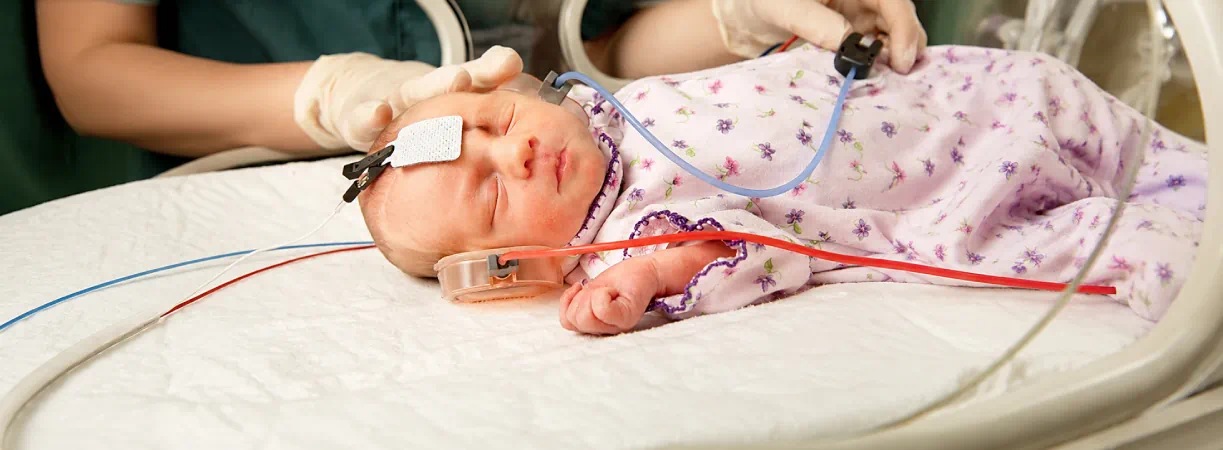
During the test, small electrodes are placed on the patient's head or scalp. Earphones or insert earphones deliver a series of sounds to the ears. The electrodes detect the electrical responses generated as the sound signal travels through the auditory nerve and brainstem.
The recorded responses are displayed as waveforms. A trained healthcare professional interprets these patterns along with the patient's symptoms, medical history, ear examination, and other hearing test results.
Because BERA does not require the patient to actively respond to each sound, it can be particularly helpful when behavioral hearing tests are difficult to perform.
Why Is BERA Performed?
BERA may be recommended when an objective assessment of hearing or the auditory pathway is needed.
It may be considered for:
- Infants and young children who cannot reliably respond to hearing tests
- Children with developmental or communication concerns
- Individuals who cannot provide consistent responses during conventional testing
- Suspected hearing loss
- Certain neurological or auditory pathway concerns
- Further evaluation when other hearing test results require clarification
The exact reason for recommending BERA varies from patient to patient. Your ENT specialist can determine whether the test is appropriate based on your symptoms and clinical findings.
How Does a BERA Test Work?
Before testing begins, your healthcare professional may review your hearing history and examine your ears.
Small electrodes are then placed on specific areas of the scalp and forehead. These electrodes detect very small electrical signals generated by the auditory system.
Sounds are delivered through earphones or small inserts placed in the ears. The patient generally does not need to speak, raise a hand, or press a button in response.
The equipment records the electrical activity associated with the sound stimulation. The resulting waveforms can provide information about how signals travel along the auditory pathway.
Is BERA Painful?
BERA is a noninvasive test and is generally painless.
The electrodes are attached to the skin using a suitable material, and sounds are delivered through earphones or inserts. Some patients may find the electrode placement slightly unfamiliar, but the procedure does not involve needles or surgery.
The patient needs to remain relatively still during testing because movement can interfere with the recordings.
BERA in Infants and Young Children
One of the important uses of BERA is assessing hearing in babies and young children who cannot reliably participate in conventional behavioral hearing tests.
Young children may not be able to consistently indicate whether they heard a sound. Because BERA records an involuntary electrical response, it can provide useful objective information.
Depending on the child's age and ability to remain still, testing may be performed while the child is naturally asleep. In some situations, the healthcare team may discuss other options to help obtain reliable recordings.
Early identification of hearing difficulties can be important because hearing contributes to speech, language, communication, and learning.
Why Does the Patient Need to Stay Still?
BERA measures very small electrical signals. Body movement, muscle activity, and other electrical interference can make these signals more difficult to record accurately.
For this reason, remaining calm and still during the test is important.
In babies and young children, natural sleep may make testing easier. The healthcare team will provide appropriate instructions based on the patient's age and clinical needs.
What Can BERA Tell You?
BERA can provide information about the electrical responses generated by the auditory pathway following sound stimulation.
The test may help estimate hearing sensitivity in certain situations and can also provide information about the timing of signals traveling along the auditory pathway.
However, BERA is only one part of a hearing evaluation. Results need to be interpreted alongside other findings to understand the patient's hearing status and determine the appropriate next step.
BERA and Other Hearing Tests
Different hearing tests assess different parts of the hearing system.
Pure Tone Audiometry measures the softest sounds a person can hear at different frequencies and generally requires active responses.
Otoacoustic Emission testing evaluates responses generated by the cochlea and does not require active participation.
Tympanometry assesses eardrum movement and middle ear function.
BERA evaluates electrical responses associated with the auditory pathway following sound stimulation.
Depending on the patient's symptoms, age, and clinical situation, an ENT specialist may recommend one or more of these tests.
What Happens After BERA?
Once testing is completed, the recorded waveforms are reviewed and interpreted by the appropriate healthcare professional.
If the findings suggest a hearing concern or require further clarification, additional hearing or medical evaluation may be recommended.
The next step depends on the patient's age, symptoms, medical history, and results from other assessments. In children, further evaluation may be particularly important when hearing concerns could affect speech or language development.
When Should You Consider BERA?
BERA may be considered when an objective assessment of hearing is required and conventional hearing tests cannot provide reliable results.
Parents may be advised to discuss BERA with an ENT specialist if a child does not respond consistently to sounds, has suspected hearing loss, or has developmental or communication concerns.
Adults may also undergo BERA when a healthcare professional needs additional information about hearing or the auditory pathway.
A detailed evaluation helps determine whether BERA is appropriate and whether other diagnostic tests should be performed.
Take the Next Step in Hearing Evaluation At Garv Diagnostic Centre & Hospital
When hearing cannot be assessed reliably through conventional methods, an objective test such as BERA can provide valuable information about the auditory pathway. It can be particularly useful for infants, young children, and individuals who have difficulty providing consistent behavioral responses.
If you have concerns about hearing, speech development, or auditory function, consult Dr. Vaibhav Kuchhal, ENT specialist, for a comprehensive evaluation and guidance on whether BERA or another diagnostic hearing test may be appropriate.
Frequently Asked Questions
Q: Is BERA the same as a regular hearing test?
A: No. BERA records electrical responses associated with sound traveling through the auditory pathway, while conventional behavioral hearing tests require the patient to respond when sounds are heard.
Q: Is BERA safe for babies?
A: BERA is a noninvasive hearing assessment and can be used in infants when an objective evaluation is clinically appropriate.
Q: Does BERA hurt?
A: No. BERA is generally painless. Small electrodes are placed on the skin, and sounds are delivered through earphones or inserts.
Q: Does a child need to be awake during BERA?
A: Testing often works best when a young child is naturally asleep or very relaxed because movement can interfere with the recordings. The appropriate approach depends on the child's age and clinical situation.
Q: How long does a BERA test take?
A: The duration varies depending on the patient's age, the type of assessment, and whether additional measurements are required.
Q: What happens if BERA shows an abnormal result?
A: An abnormal or unclear result does not by itself establish the cause of a hearing problem. Your ENT specialist may recommend additional hearing tests or other evaluation to better understand the findings.



Office Hours
Mon–Sat: Open 24 Hours
Sun: 8:00 AM–2:00 PM


©2026 | Garv Diagnostic Centre & Hospital | All Rights Reserved | Digital Marketing By Remedo